
March 20, 2025
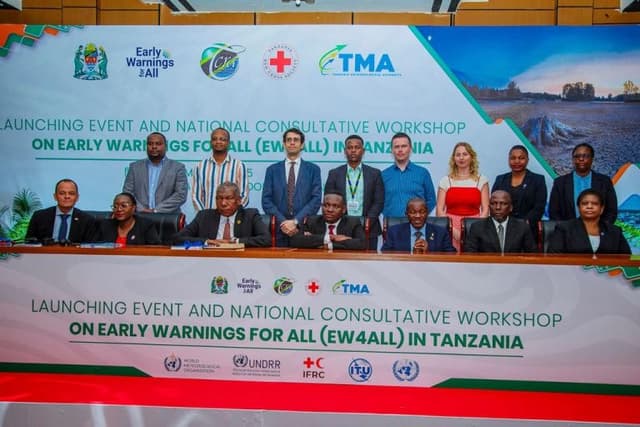
Eastern Africa Advances Early Warning Systems to Tackle Climate Risks
Tanzania has officially launched the Early Warnings for All (EW4All) Initiative, joining regional peers Burundi, Rwanda, South Sudan, and Uganda in a growing movement to protect communities from climate hazards such as floods, droughts, and extreme heat. The launch event, held in Dodoma from 19–20 March 2025, brought together over 100 representatives from government, NGOs, and international partners to strengthen collaboration. The EW4All initiative, spearheaded globally by the United Nations and supported in Tanzania by the Danish government and the World Meteorological Organization (WMO), aims to ensure universal access to life-saving early warning systems by 2027. Deputy Minister of Transport, Hon. David Mwakiposa Kihenzile, emphasized the urgency: “Early warning systems are vital for saving lives and building long-term climate resilience.” The Tanzania Meteorological Authority also released its State of the Climate Report 2024, revealing that last year was the hottest on record and marked by Cyclone Hidaya, the strongest tropical storm ever to hit the country. A national roadmap is being developed following a gap analysis across EW4All’s four pillars. Kenya is set to be the next East African nation to adopt the initiative, as the region accelerates efforts to combat rising climate risks.
April 2025
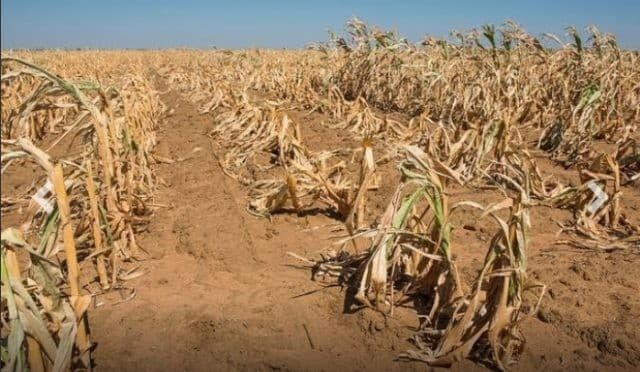
Africa Faces Hottest Decade on Record, WMO Warns
Africa is facing intensifying climate impacts, with 2024 set to be the warmest or second-warmest year ever recorded, according to a new report by the World Meteorological Organization (WMO). The past decade is officially the hottest on record for the continent, bringing worsening droughts, floods, and extreme weather that threaten food security, displace communities, and damage infrastructure. East Africa is grappling with prolonged dry spells that cripple agriculture, while West Africa faces erratic rainfall. Coastal regions, such as Mozambique, are seeing rising sea levels and stronger storms. Despite contributing the least to global greenhouse gas emissions, Africa suffers disproportionately from climate change. The State of the Climate in Africa 2024 report—developed by the WMO in collaboration with African and international partners—focuses on loss and damage. It calls for urgent global investment in adaptation and mitigation. There are signs of hope: African nations are embracing renewable energy and climate-smart agriculture. Kenya’s wind farms and Ethiopia’s sustainable farming practices highlight the continent’s resilience. Still, the report stresses that Africa’s future depends on immediate, collective global action to build climate resilience and protect lives and livelihoods.
April 16, 2025
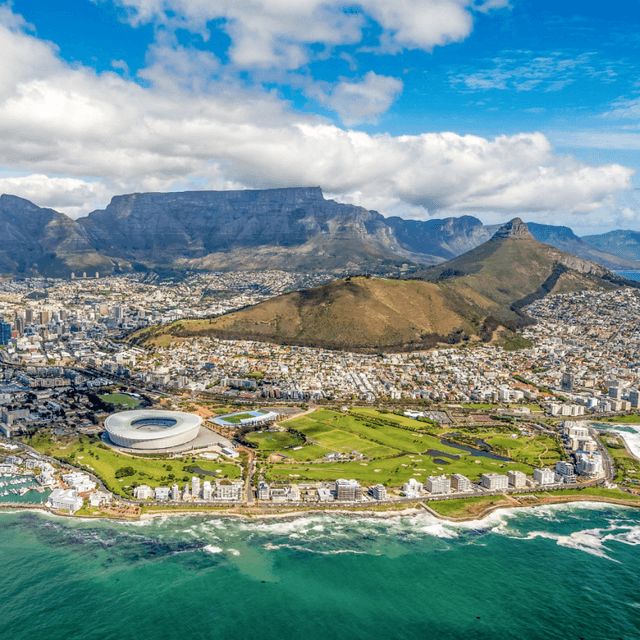
Cape Town to Host 2025 F20 Climate Forum, Spotlighting Africa’s Climate Leadership
Cape Town will host the 2025 F20 Climate Solutions Forum on 27–28 May, the first time the event is held in Africa. Co-hosted by the Foundations Platform F20 and Democracy Works Foundation, the forum aims to elevate Africa’s climate and development priorities ahead of the G20 Summit in Johannesburg. Under the theme “Solidarity, Equality, and Sustainable Development”, the forum will convene global climate leaders, philanthropies, and civil society to advance climate justice, sustainable finance, and inclusive governance. Key speakers include EU Ambassador Sandra Kramer, Cape Town Deputy Mayor Eddie Andrews, and Dorah Modise of the Presidential Climate Commission. Sessions will address food security, just energy transitions, and democratic resilience. Held in a hybrid format at the Old Mutual Conference Centre in Kirstenbosch, the forum is supported by partners such as the Nelson Mandela Foundation and the Clean Air Fund. Saliem Fakir of the African Climate Foundation emphasized Africa’s growing role in climate diplomacy and the need for unity. “We must speak with one voice,” he urged, warning that fragmentation weakens Africa’s global influence. Fakir called for stronger African coordination and leadership as the continent’s strategic importance in green industries grows.
May, 2025
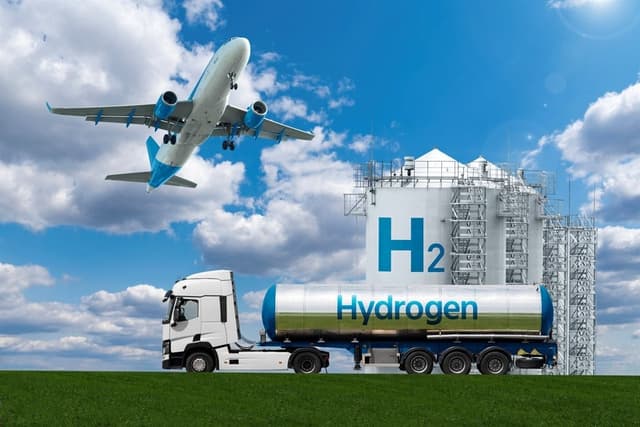
Metacon Signs €1.82 Million Green Hydrogen Deal in Morocco
Swedish energy firm Metacon has signed a €1.82 million agreement to supply a 1 MW pressurised alkaline electrolyser to Morocco, marking its entry into the North African country’s renewable energy landscape. The system will operate off-grid, powered directly by wind turbines owned by a leading Moroccan renewable energy firm. Delivered as a containerised, plug-and-play unit, the project aims to integrate hydrogen production with wind power in a pilot setting. Though modest in scale, the initiative symbolizes Morocco’s early steps toward building a green hydrogen economy aligned with its long-term decarbonization goals. Metacon highlighted Morocco’s strong potential due to its abundant solar and wind resources, suggesting the country could become a hydrogen hub in North Africa. However, experts caution that Morocco’s hydrogen ambitions face steep cost and scale challenges. “Producing 1 MW is only a start,” said energy analyst Amine Bennouna. “To meet national needs, we’d need gigawatts, not megawatts—and at a much lower cost.” Despite limitations, the project reflects Morocco’s strategic approach: small-scale experimentation with international partners to build capacity and attract future investment in green fuels, hydrogen, and clean ammonia exports.
May, 2025
UN Warns Climate Change Deepening Crises across Africa
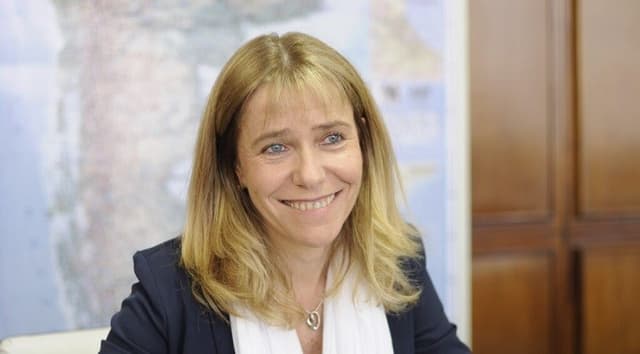
The UN World Meteorological Organization (WMO) has warned that climate change is having devastating effects across Africa, worsening hunger, displacement, and insecurity. In a statement released Monday, the WMO highlighted severe floods in South Sudan that wiped out millions of livestock, devastating the livelihoods of herding communities. These losses, it said, are emblematic of how extreme weather is eroding the continent’s social and economic fabric. WMO Secretary-General Celeste Saulo called climate change “an urgent and escalating crisis” for Africa. “Some countries face relentless flooding, while others are crippled by drought and water scarcity,” she said. In 2023, extreme weather displaced 700,000 people across the continent. Northern Nigeria saw 230 deaths and 600,000 displacements from floods, while southern Africa endured historic droughts slashing crop yields by up to 50%. Record sea surface temperatures in the Atlantic and Mediterranean, combined with El Niño effects, disrupted rainfall patterns and intensified extreme events. Heatwaves, like those in South Sudan reaching 45°C, have become a growing public health threat, with school closures affecting millions. The WMO urged urgent investment in local climate adaptation, warning that high-cost solutions like desalination could worsen Africa’s financial and environmental vulnerabilities.
May, 12 2025

South Sudan’s Ex-Petroleum Minister Urges Relocation of Africa Energies Summit to African Soil
Former South Sudanese Petroleum Minister Ezekiel Lol Gatkuoth has called for the annual Africa Energies Summit to be held on the African continent, rather than in London, arguing that Africa-focused discussions should take place on African soil. Supported by the African Energy Chamber (AEC), Gatkuoth’s statement highlights the symbolic and practical importance of hosting energy investment events within Africa to promote local engagement, business tourism, and economic development. “Africa should not have to leave the continent to discuss its own future. Hosting the Africa Energies Summit in Europe sends the wrong message,” Gatkuoth said. “It’s time to prioritize Africa and empower local industries.” Currently held in London, the summit markets itself as the premier global upstream conference for Africa. However, with over 600 million Africans lacking electricity and 900 million without clean cooking solutions, Gatkuoth argues that holding the event in Africa would catalyze investment and local value creation. The AEC echoed his sentiments, citing the success of locally hosted events like AEW: Invest in African Energies, which have bolstered regional industries, created jobs, and shifted narratives. “We must stop exporting African conversations abroad,” added AEC Chairman NJ Ayuk. “Africa is ready to lead and host its own energy future.”
May, 2025
Precise Climate Data Crucial for #GreaterHornofAfrica's Resilience
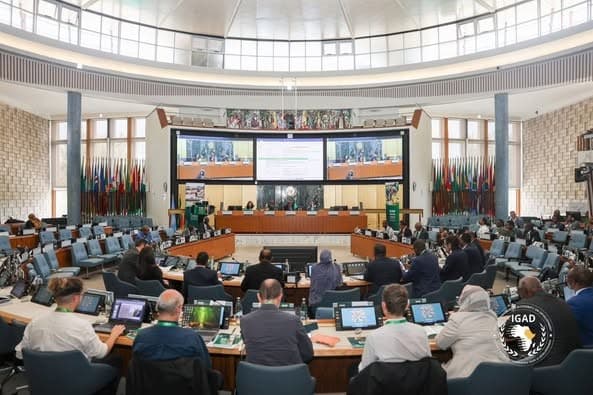
With the Greater Horn of Africa facing increasingly severe droughts and floods, precise climate outlooks are indispensable for effective mitigation and safeguarding millions of lives and livelihoods, according to Ethiopia’s Ministry of Water and Energy. Convening diverse stakeholders in Addis Ababa, the 70th Greater Horn of Africa Climate Outlook Forum (GHACOF 70) aims to enhance early warning systems for climate change and anticipated floods and landslides due to expected normal to above-normal rainfall from June to September 2025. Speaking at the forum today, Minister of Water and Energy Habtanu Itefa underscored the vital role of the forum in fostering collaboration between scientists and policymakers. Stakeholders have convened at the GHACOF 70 forum in Addis Ababa to strengthen early warning systems and bolster resilience for vulnerable populations. The forum, an annual gathering organized three times a year by the IGAD Climate Prediction and Applications Centre (ICPAC), brings together climate scientists, meteorologists, sector experts, and policymakers from across the region and beyond. The participation of IGAD member states, including host nation Ethiopia, underscores the pressing need for accurate and timely climate information to combat the growing threats of drought and floods. The minister emphasized that precise climate outlooks are crucial for effective mitigation by policymakers and disaster managers, highlighting the forum as a vital platform for collaboration between scientists and users to inform government decisions, especially for enhanced flood preparedness during wetter seasons. This year's GHACOF theme, "Climate Services to Bridge the Early Warning Gap," is particularly relevant given the alarming drought concerns in the Greater Horn of Africa.Minister Habtamu emphasized the rising frequency and intensity of both droughts and floods, which have severely impacted lives and livelihoods and caused significant property damage. He noted that key sectors such as agriculture, food security, water resources, hydropower, tourism, and health are particularly vulnerable to these adverse climate effects. "Our region has been experiencing increasing trends in frequency, intensity and severity of droughts and occasional floods that have disrupted the lives and livelihoods of millions," he stated, underscoring the forum's urgency in providing accurate scientific guidance for policymakers and ensuring the timely dissemination of crucial weather and climate information, especially to vulnerable grassroots communities. Fetene Teshome, Director General of the Ethiopian Meteorological Institute, echoed these concerns, on his part, emphasized the Great Horn African region's high susceptibility to climate-related risks. He pointed out that intensifying climate change and seasonal shocks are causing erratic rainfall, prolonged dry spells, and excessive rainfall, thereby increasing vulnerability and significantly impacting farming and the economy. "With increasing climate variability and a changing climate, the role of climate information in minimizing risks and optimizing opportunities is undeniable," Fetene added. He emphasized the Ethiopian Meteorological Institute's commitment to delivering reliable and accessible climate information for better-informed decision-making. Mohamed Abdi Ware, Deputy Executive Secretary of IGAD, affirmed the growing climate extremes in the Greater Horn of Africa, which are undermining food security, water availability, and socio-economic development. He reiterated IGAD's commitment through ICPAC to providing essential climate services and institutionalizing GHACOFs as key platforms for co-production, coordination, and learning. "ICPAC is developing a Regional Framework for Climate Services to enhance coordination and delivery of climate information," Ware announced. "The framework aims to institutionalize GHACOFs, address climate-related challenges, provide tailored climate information, and minimize duplication of efforts." Titike Kassa, a Research Scientist at ICPAC, announced that most IGAD member countries are predicted to receive normal to above-normal rainfall between June and September 2025.Explaining the forecast, he noted that the anticipated shift towards average and below-average temperatures in the central Pacific Ocean is expected to contribute to normal to above-normal rainfall across the greater East Africa region. The researcher further stated that the consensus prediction necessitates that IGAD member nations undertake proactive preparatory measures. The forecast suggests a heightened risk of flooding in low-lying areas of East Africa and landslides in hilly regions over the next four months, he noted.
May, 19 2025

ECA Chief Underscores Need for Fair, Equitable Access to Climate Finance
The Executive Secretary of the Economic Commission for Africa (ECA), Claver Gatete, underscored the need for fair and equitable access to climate finance, pointing out that Africa is the least responsible for climate change, yet it pays the highest price for its impacts. Gatete made this statement in his opening remarks at a side event during the Fourth Preparatory Committee (PrepCom) held on the margins of World Bank and IMF meeting in Washington. Co-organised by the ECA and the African Union Commission (AUC), the event aimed to review Africa’s priorities for the FfD4 scheduled for 30 June to 3 July 2025, building on outcomes from regional consultations, and to identify key actions to ensure the FfD4 agenda aligns with Africa’s development needs. “With the Fourth Financing for Development Conference (FfD4) in Seville, Spain, just two months away, Africa has a once-in-a-generation opportunity to rewrite the rules of global finance, so they serve as a bridge to Africa’s sustainable development,” Gatete stated. Stressing the need to strengthen domestic resource mobilization and tackling illicit financial flows, Gatete said that as long as 89 billion USD escapes African economies each year, true resilience will remain out of reach. “It is essential that we broaden tax bases, optimize tax systems through digitalization and plug the leaks that drain the continent’s potential,” he said and stressed the need to push forward the Framework Convention on International Tax Cooperation, “to ensure that global tax rules are made with Africa and not for Africa.” Gatete reiterated the need to reform the global financial architecture calling for multilateral sovereign debt workout mechanism, comprehensive reform of the G20 Common Framework, an immediate interest moratorium and the establishment of a global debt authority to ensure fair, timely and transparent restructuring processes. “African countries are struggling to invest in critical sectors, like health, education and innovation, due to unsustainable debt. It is unacceptable that today, more than 20 African countries are either already facing debt distress or are at imminent risk,” he said. He also underscored the need for fair and equitable access to climate finance, noting that Africa is the least responsible for climate change, yet it pays the highest price for its impacts. Despite contributing less than 4 percent of global emissions, the Continent faces rising costs of adaptation and mounting barriers to climate finance. “We must reform global climate finance systems to prioritize grants over loans, adaptation over mitigation and justice over expediency,” he said, adding that Africa’s natural capital must be properly valued and not just exploited. The Executive Secretary reiterated his earlier call during the week, for the reform of multilateral development banks and international financial institutions to match today’s global realities. While he applauded the African Union’s and South Africa’s inclusion in the G20 and the incremental gains at the IMF and World Bank, he said Africa calls for a full reform of quota systems, a recalibration of voting rights and a development finance architecture that puts the Continent's priorities including climate resilience, industrialization and human capital at its heart. Gatete also urged for “an African Financing for Development Accountability Platform” to track the FfD4 commitments and progress, expose gaps and accelerate real change and underscored the need to institutionalize robust accountability and data systems. “Without data, progress cannot be assessed. And without accountability, promises are immeasurable,” he said. He further stressed the need to unlock private capital for development as public finance alone cannot bridge the continent’s investment gap, estimated at 100–$150 billion USD annually.
May, 2025
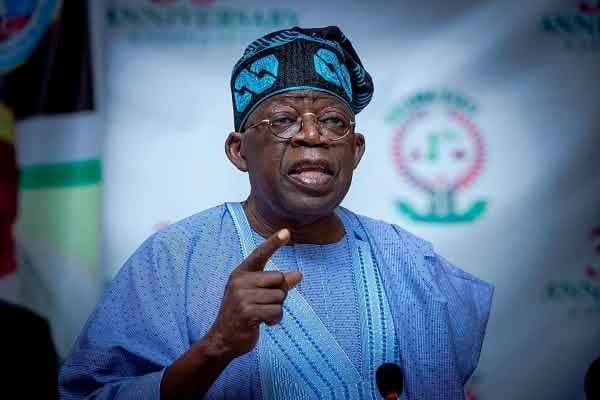
Nigerian President Urges World Leaders to Address Global Climate Crisis
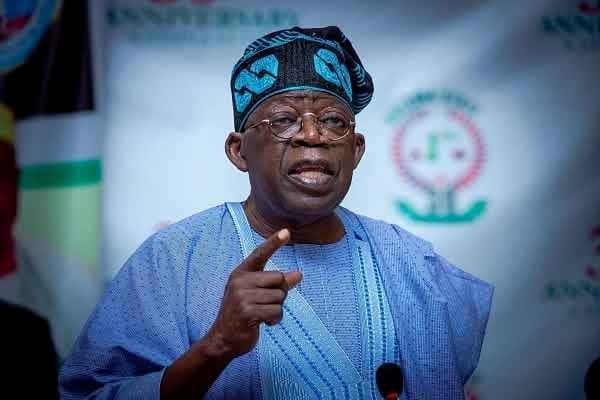
Nigerian President Bola Tinubu has called on world leaders to demonstrate unity, courage, and sustained commitment in addressing the worsening global climate crisis. Addressing a high-level virtual dialogue on Wednesday, Tinubu reaffirmed Nigeria's dedication to forging a paradigm shift in which climate action and economic growth advance together. "The global climate emergency demands our collective, courageous, and sustained leadership," said Tinubu. "For Nigeria, the urgency of this moment is clear: we view climate action not as a cost to development, but as a strategic imperative." The event was co-organized by United Nations Secretary-General Antonio Guterres and Brazilian President Luiz Inacio Lula da Silva to accelerate global climate ambition ahead of COP30, which Brazil will host in November. Tinubu outlined Nigeria's Energy Transition Plan as a bold, pragmatic roadmap for reaching net-zero emissions by 2060. The plan targets five core sectors, including power, cooking, transportation, oil and gas, and industry, with a financing need of over 410 billion U.S. dollars. Highlighting Nigeria's role as an anchor country in the Mission 300 initiative, implemented in partnership with the World Bank and the African Development Bank, Tinubu noted that the initiative aimed to deliver electricity to 300 million Africans by 2030. He also recalled his participation in the Dar es Salaam Declaration earlier this year and Nigeria's presentation of its National Energy Compact, which outlines reform commitments, investment opportunities, and measurable targets to expand clean energy access and clean cooking solutions. "We are working to position Nigeria as a premier destination for climate-smart investment through the development of a Global Climate Change Investment Fund, which will serve as a platform to blend public and private capital, de-risk green infrastructure, and finance clean energy solutions at scale," Tinubu said.He added that the fund will support key national priorities such as green industrial hubs, e-mobility infrastructure, regenerative agriculture, and renewable energy mini-grids for underserved communities.
May, 25 2025
World Leaders Rally for ‘Full-speed’ Climate Action Ahead of COP30G20
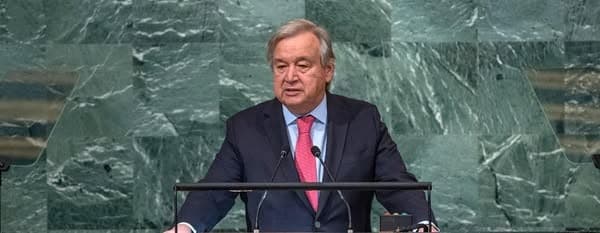
At a high-stakes virtual summit on Wednesday, UN Secretary-General António Guterres and Brazilian President Luiz Inácio Lula da Silva brought together 17 national leaders from major economies and climate-vulnerable countries. The goal was to accelerate global climate ambition ahead of COP30, which will be hosted in Brazil. The meeting was part of a joint mobilization strategy by the two leaders to strengthen global action under the Paris Agreement and build momentum for stronger national climate plans to be announced in 2025. The two-hour session held behind closed doors included China, the European Union, the African Union, the Association of Southeast Asian Nations, and small island developing States. Guterres described it as one of the most diverse meetings of national leaders focused exclusively on climate for some time, carrying a powerful unifying message. “As we heard today, the world is moving forward. Full-speed ahead. No group or government can stop the clean energy revolution”, he declared at a press briefing afterwards. He said many leaders pledged to deliver ambitious new climate plans, formally known as National Determined Contributions (NDCs), as soon as possible in what he called a “strong message of hope”. Guterres announced that President Xi Jinping confirmed during the meeting that China’s updated NDCs would cover all economic sectors and all greenhouse gases — a clarification he described as “extremely important” for climate action. He added that these pledges provide a vital opportunity to chart a bold path for the next decade and most importantly, help speed up a just transition away from fossil fuels to renewables. Renewable energy production is “the economic opportunity of the century,” he said, describing it as the “pathway out of climate hell.” “The clean energy sector is booming – creating jobs and boosting competitiveness and growth worldwide…Science is on our side and economics have shifted.”The UN chief noted that prices for renewables have fallen dramatically, offering “the surest route to energy sovereignty and security, ending dependence on volatile and expensive fossil fuel imports.” Since the 2015 Paris Agreement, global projections for warming have declined, from over 4°C this century to 2.6°C if current plans are implemented. But that still falls short of limiting temperature rise to 1.5°C above pre-industrial levels – the goal agreed in Paris by nations and endorsed by climate scientists.The Secretary-General urged leaders to submit national plans that align with that target, cover all greenhouse gases and sectors, and signal a full commitment to achieving net zero emissions by 2050. Guterres underscored the need to direct far more support to developing countries, which face the most severe impacts of climate change despite contributing the least to global emissions. “Africa and other parts of the developing world are experiencing faster warming – and the Pacific islands are seeing faster sea-level rise – even while the global average itself is accelerating,” he said. He called on countries to deliver a credible roadmap to mobilize 1.3 trillion USD per year for developing nations by 2035, double adaptation finance to 40 billion USD this year, and increase contributions to the new Loss and Damage Fund created at COP28.The Secretary-General also announced a high-level UN event in September – just weeks ahead of COP30 – to assess progress on climate plans and finance. The message was clear, according to Guterres. “We cannot, must not, and will not let up on climate action.”
May, 25 2025
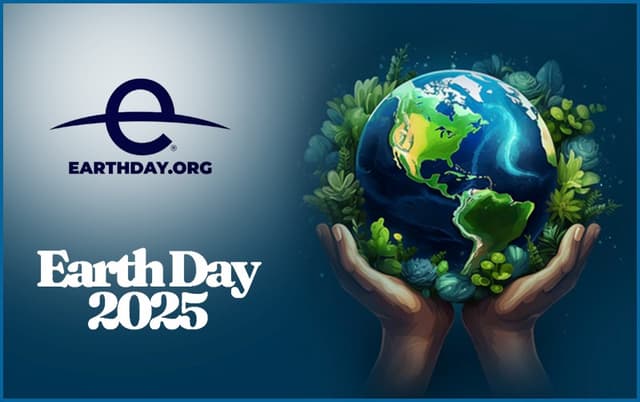
Africans Urge for More Investments in Renewable Energy to Address Impacts of Climate Change
The world marked International Earth Day on April 22, a day dedicated to raising awareness of environmental conservation and sustainability. This year's Earth Day is celebrated under the theme "Our Power, Our Planet," urging efforts to unite around renewable energy and the global target to triple clean electricity by 2030, as agreed upon at the 28th Conference of the Parties to the United Nations Framework Convention on Climate Change. Africans are disproportionately affected by climate change, despite contributing very little to global greenhouse gas emissions. Many African countries are already facing challenges related to poverty, food security, and infrastructure, making them particularly susceptible to climate change impacts. Most Africans who are aware of climate change say it is making their lives worse and call on their governments and wealthy countries to take the lead in reducing its impact, the latest Afrobarometer survey findings revealed. On average across 28 countries, nearly three-fifths of Africans are aware of climate change. Among those who are familiar with the phenomenon, about two-thirds say human activity is the main cause of climate change. In response to changing weather patterns and environmental degradation, majorities of Africans endorse investments in climate-resilient infrastructure, pressure to be applied on rich countries to provide more climate aid, and more investments in wind and solar energy. The emphasis of this year’s Earth Day is on accelerating the transition to renewable energy sources with the goal of tripling global clean electricity generation by 2030. As the world grapples with the urgency of climate change, the intersection between renewable energy and the water sector has become an increasingly vital area of focus. The United Nations has recognized Earth Day as an opportunity to reaffirm the importance of protecting the planet's ecosystems, which are foundational to sustaining life on Earth. Climate change, deforestation, land-use change, and biodiversity loss continue to accelerate the degradation of our environment, making Earth Day’s call for a shift towards sustainable practices even more pertinent.
April 23, 2025
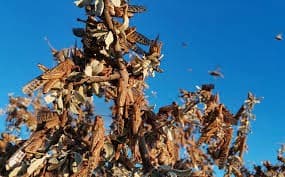
Locust Outbreak Confirmed in Namibia
Namibia's Ministry of Agriculture, Fisheries, Water and Land Reform has confirmed a locust outbreak in the country's northeastern Zambezi Region, affecting multiple areas and raising concerns of a possible second wave of infestations. In a public notice issued Tuesday, Ndiyakupi Nghituwamata, executive director at the ministry, said the outbreak was first reported in early February following heavy rains and has been observed in the hopper and fledgling stages. Locusts have been spotted along the floodplains of Ibbu, near the Chobe River, and in about 11 constituencies in the Zambezi Region, she said, adding that significant rainfall has created ideal conditions for locust reproduction. "We are urging farmers to report any sightings of locust bands or swarms to the nearest Agricultural Development Center," she said. Nghituwamata said that the continued presence of green vegetation in northeastern and north-central Namibia, as well as in neighboring countries such as Zambia, Botswana and Angola, provides favorable conditions for a second generation of locusts. As vegetation begins to dry, the insects are expected to form groups and potentially move northward in small swarms, she added. The southern African nation has deployed a team of agricultural officers to the region to control the outbreak using vehicle-mounted sprayers and mist blowers. "We are actively monitoring the situation and carrying out control measures to limit the spread," Nghituwamata said. Namibia has experienced several locust outbreaks in recent years. In 2020, an outbreak of African migratory locusts affected over 700,000 hectares across the Zambezi, Kavango East, Kavango West and Otjozondjupa regions.
April 23, 2025
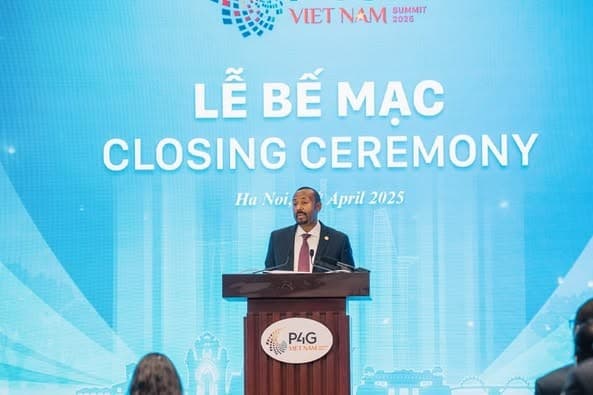
P4G Rallying Point of Collectivism to Accelerate Green Growth, Foster Innovative Partnerships: PM Abiy
Partnership for Green Growth and the Global Goals 2030 (P4G) Summit has been a rallying point for our collectivism to accelerate green growth, foster innovative partnerships and deliver on the promise of the Sustainable Development Goals, Ethiopia’s Prime Minister Abiy Ahmed underscored. Prime Minister Abiy expressed gratitude for receiving the torch accrediting Ethiopia as the host of the 5th Summit of the Alliance for Green Growth and Global Goals 2030 (P4G) in 2027. The premier said in a speech delivered at the conclusion of 4th P4G Summit in Vietnam, Hanoi on Thursday, that “We embrace this opportunity with determination and unwavering commitment to build on the inspiring legacy of Vietnam, Colombia, Denmark and the Republic of Korea. Guided by p4G's core principles of partnership, innovation, inclusivity and action,” the premier affirmed. Ethiopia's 2027 summit will spotlight green industrialization, climate resilience agriculture and the empowerment of youth and women as essential agents of change in the green transition, Prime Minister Abiy noted. He extended Ethiopia’s profound gratitude to the government and people of the Socialist Republic of Vietnam for their warm hospitality and meticulous organization in hosting this important summit. This gathering has been more than a meeting of minds, Abiy said noting that the summit has been a rallying point for our collectivism to accelerate green growth, foster innovative partnerships and deliver on the promise of the Sustainable Development Goals. “Over the past few days, we have witnessed the Power of unity and diversity, governments, businesses and civic society coming together to catalyze action in clean energy, the circular economy, climate smart agriculture and inclusive development.” Prime Minister Abiy said though Ethiopia remains among the countries most vulnerable to climate change; “we are also among the most committed. We have set an ambitious course toward the climate resilient Net Zero economy by 2050 aligned with agenda 2030 and the African Union agenda 2063.” Ethiopia’s climate resilient green economy strategy, the green legacy initiative, and its expanding renewable energy portfolio, reflect the country’s dedication to this vision, Prime Minister Abiy underlined. “But no country can confront the climate crisis alone, the paths forward demands collective leadership and urgent action,” he urged. Ethiopia has been a resolve in the commitment of the ideals and objectives of the P4G partnership, and has proudly contributed to the platform since its inception in 2018. “We believe in its unique value as a bridge between public policy and private sector innovation through collaborative projects in food systems, renewable energy, resilient cities and the circular economy, we have seen what is possible when we walk together.” As a founding P4G member and partly to key climate agreements, Ethiopia remains committed for advancing green recovery and sustainable development, Prime Minister Abiy affirmed. “As we depart Hanoi, let us carry with us the spirit of partnership, the momentum of ambition and the conviction that green growth is not a distant goal, but a shared imperative,” he urged.
April 18, 2025
May, 25 2025
Nigerian President Bola Tinubu has called on world leaders to demonstrate unity, courage, and sustained commitment in addressing the worsening global climate crisis. Addressing a high-level virtual dialogue on Wednesday, Tinubu reaffirmed Nigeria's dedication to forging a paradigm shift in which climate action and economic growth advance together. "The global climate emergency demands our collective, courageous, and sustained leadership," said Tinubu. "For Nigeria, the urgency of this moment is clear: we view climate action not as a cost to development, but as a strategic imperative." The event was co-organized by United Nations Secretary-General Antonio Guterres and Brazilian President Luiz Inacio Lula da Silva to accelerate global climate ambition ahead of COP30, which Brazil will host in November. Tinubu outlined Nigeria's Energy Transition Plan as a bold, pragmatic roadmap for reaching net-zero emissions by 2060. The plan targets five core sectors, including power, cooking, transportation, oil and gas, and industry, with a financing need of over 410 billion U.S. dollars. Highlighting Nigeria's role as an anchor country in the Mission 300 initiative, implemented in partnership with the World Bank and the African Development Bank, Tinubu noted that the initiative aimed to deliver electricity to 300 million Africans by 2030. He also recalled his participation in the Dar es Salaam Declaration earlier this year and Nigeria's presentation of its National Energy Compact, which outlines reform commitments, investment opportunities, and measurable targets to expand clean energy access and clean cooking solutions. "We are working to position Nigeria as a premier destination for climate-smart investment through the development of a Global Climate Change Investment Fund, which will serve as a platform to blend public and private capital, de-risk green infrastructure, and finance clean energy solutions at scale," Tinubu said.He added that the fund will support key national priorities such as green industrial hubs, e-mobility infrastructure, regenerative agriculture, and renewable energy mini-grids for underserved communities.

About
About Us
Privacy Policy
Cookie Policy
PoA Programs
Program Name
Program Name
Program Name
Program Name
Copyright 2025 PoA. All rights reserved.